REVIEW · TOKYO
Full Day Tour at Mt. Fuji, Onsen, Lake Kawaguchi and Yamanaka
Book on Viator →Operated by Hotel Takitei · Bookable on Viator
Fuji in a single day feels like cheating. You get air-conditioned round-trip transport, a multilingual guide, and the kind of planning help that makes the Fuji area actually workable. I love how the day is built around viewpoints and photo stops, with time to wander on your own.
I especially like the stop choices: Lake Kawaguchiko for Fuji views and lakeside strolling, plus the on-the-ground payoff of Mt. Fuji 5th Station (seasonal) or Arakurayama Sengen Park (seasonal). And yes, the drive matters here—long road time can turn into a relaxed, scenic segment when someone else is handling directions.
The main thing to weigh is this: Mount Fuji visibility is not guaranteed, and weekend traffic can shuffle timing. If you need a perfectly timed, fully guided museum-style experience, you might find some moments too self-paced.
In This Review
- Quick hits before you go
- How this Fuji day tour actually feels
- Price and what you truly get for about $50
- Meeting up, getting organized, and understanding the group setup
- Mt. Fuji 5th Station or Arakurayama Sengen Park: plan for the seasonal swap
- Mt. Fuji 5th Station (Apr 26–Sep 30)
- Arakurayama Sengen Park (Oct 1–Apr 25)
- A key limitation to accept
- Lake Kawaguchiko: where you trade crowds for water views
- Lake Yamanaka: Swan Lake energy plus the one hard choice
- Driving time, comfort, and the traffic factor you can’t ignore
- What the guide adds (and what you should do for extra value)
- Timing details that matter on the ground
- Practical tips: tattoos, cash, and Fuji visibility
- Who this tour fits best (and who might prefer something else)
- Should you book this Fuji day tour?
- FAQ
- FAQ
- What time length should I expect for this tour?
- Is transportation included from Tokyo and back?
- Do I visit Mt. Fuji 5th Station for every departure?
- Are boat rides and hot spring entry included?
- What about lunch?
- How does the Lake Yamanaka part work?
- Can I enter Japanese hot springs if I have tattoos?
- Is Mount Fuji always visible during the tour?
Quick hits before you go
- Seasonal swap: choose between Mt. Fuji 5th Station (Apr 26–Sep 30) and Arakurayama Sengen Park (Oct 1–Apr 25)
- Two lakes, two vibes: Lake Kawaguchiko for views and walking, Lake Yamanaka for winter swans and a choice of water or onsen
- Onsen reality check: you can cover a small tattoo (rules depend on size and count), but large tattoos aren’t allowed
- You choose at Lake Yamanaka: boat ride or hot spring, not both due to time
- Cash helps: some places in the area may only take cash
- A proper meetup: the guide holds a yellow flag with the Gogoday logo
How this Fuji day tour actually feels
This is a long, satisfying day built around famous Fuji landmarks and the lakes that sit at its feet. The big win is that you do not have to solve Japan transport logistics while also trying to get to viewpoints on time. From pick-up to drop-off, the schedule is structured so you can hit the key stops without stitching together buses and taxis.
You’ll spend time at each place, then break away to explore at your own pace. That balance keeps the day moving but still lets you stop for the photo you came for, or find a snack when you feel like it. Expect an international group with a multilingual guide explaining things along the way.
You can also read our reviews of more tours and experiences in Tokyo.
Price and what you truly get for about $50
At $49.97 per person for an approximately 10-hour day, the value comes from the heavy lift: transport, driver, and a guide. In this part of Japan, getting around without a car can cost more than you expect, and delays are easy to get wrong. Here, the planning is already handled.
Also, you get bottled water and the comfort of an air-conditioned vehicle. Those two items sound basic, but on a hot day around the Fuji area—or a chilly day near the lakes—they keep you from feeling like the day is wearing you down.
What’s not included matters too. You’ll likely pay extra for boat tickets and onsen entry at Lake Yamanaka, plus lunch. There’s also a Fuji Shibazakura Festival fee if that season applies. If you budget for those add-ons up front, the $50 price starts to look like a smart shortcut rather than a gamble.
Meeting up, getting organized, and understanding the group setup
You meet the guide at a designated point. The guide carries a yellow flag with the Gogoday logo, which makes it easier than guessing which tour group is yours. Try to arrive 15 minutes early so you’re not doing rushed math with jet lag.
You’ll get confirmation at booking, and you’ll receive an email around 9 PM the night before with guide details, driver details, and the vehicle license plate. The tour provider asks you to share your email address after booking, because the platform may hide it. That one step can save you from last-minute confusion.
One more reality check: this runs as a shared group tour with guests from various countries, with a maximum size of 40 travelers. That can be great for energy and cross-cultural conversations, but it also means the guide may keep explanations broad rather than hyper-personal.
Mt. Fuji 5th Station or Arakurayama Sengen Park: plan for the seasonal swap
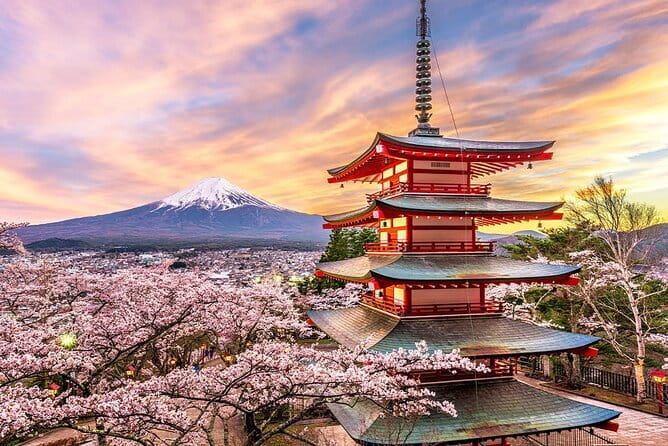
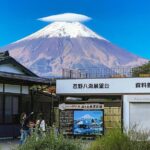
This tour has a built-in season change, and it’s important. From Apr 26 to Sep 30, you go to Mt. Fuji 5th Station. From Oct 1 to Apr 25, you visit Arakurayama Sengen Park instead.
Mt. Fuji 5th Station (Apr 26–Sep 30)
The 5th Station sits around 2,305 meters above sea level and is at the halfway point up the mountain. It’s a classic place to feel the scale of Fuji without committing to a full hike. It’s also one of those stops where you’ll want a quick game plan for photos: find your angle, shoot, then give yourself room to look around calmly.
The time here is set for about 40 minutes, and it’s free entry. That’s usually enough to get the viewpoint shots and grab a moment of mountain air, but not enough for long wandering.
Arakurayama Sengen Park (Oct 1–Apr 25)
Arakurayama Sengen Park is the seasonal alternative. It’s been flagged as one of those famous photo spots many people chase in Japan, and you’ll be able to enjoy the views and viewpoints depending on conditions. Admission is listed as free, and the stop is around 1 hour.
This option can be a good fit if you’re traveling in colder months, when full Fuji access at higher elevations may be less practical. You still get that Fuji feeling through the park’s viewpoint setup rather than through the mountain station experience.
A key limitation to accept
Weather is unpredictable here. You cannot count on perfect visibility of Mount Fuji, even if you do everything right. Go in expecting a chance at the iconic silhouette, not a guaranteed win.
Lake Kawaguchiko: where you trade crowds for water views
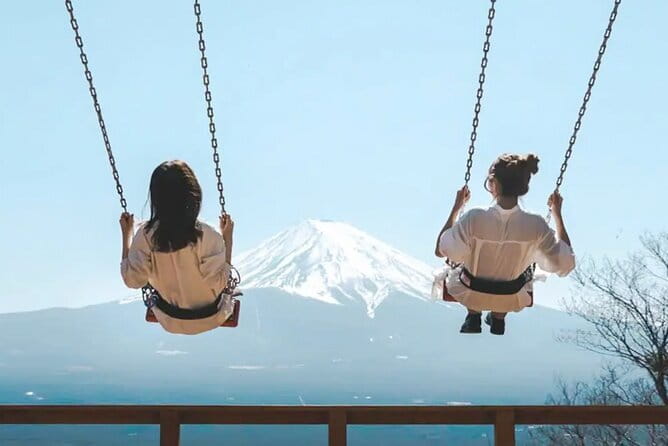
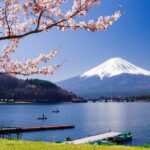
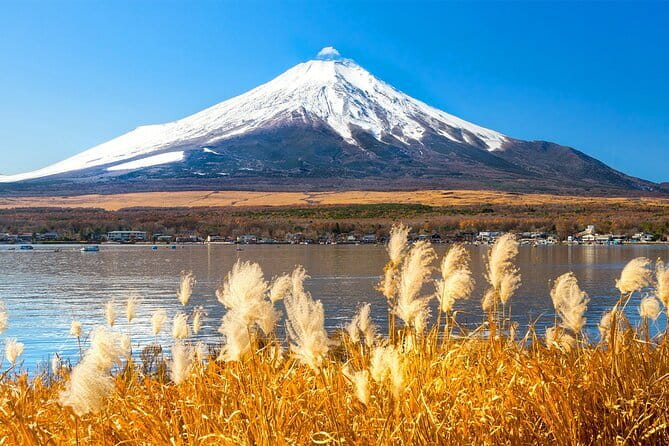
After Fuji’s peak-style views, the day shifts to the lakes. Lake Kawaguchiko is the largest of the Fuji Five Lakes, and it’s the stop most people imagine when they think of Fuji + water.
You’ll spend about 1 hour here, and you’ll have time for scenic walks and the usual lakeside exploring. Admission isn’t included, so you’ll want to check what you plan to buy on-site. One highlight is Oishi Park, which has seasonal moments like cherry blossoms depending on the year.
This stop is valuable because it changes the mood. Instead of rushing through a viewpoint, you can slow down and enjoy how Fuji changes as it sits across the water. It’s the kind of place where even a short walk can give you multiple angles, which is great if you want photos but don’t want to spend the whole day hiking.
If you’re the type who likes to win small: bring a little snack energy and use the hour to mix one scenic loop with a quick photo and you’ll come out happy.
Lake Yamanaka: Swan Lake energy plus the one hard choice
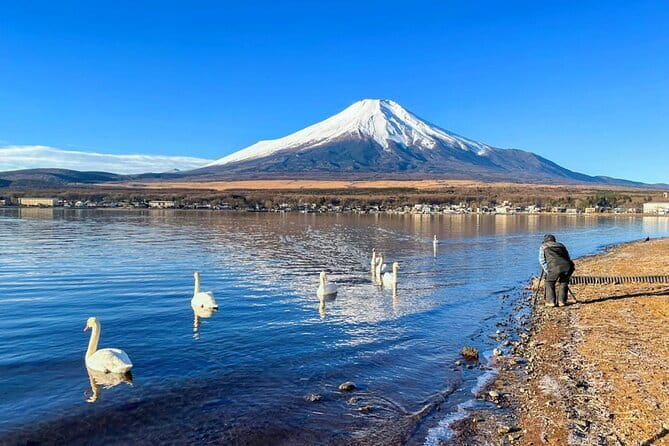
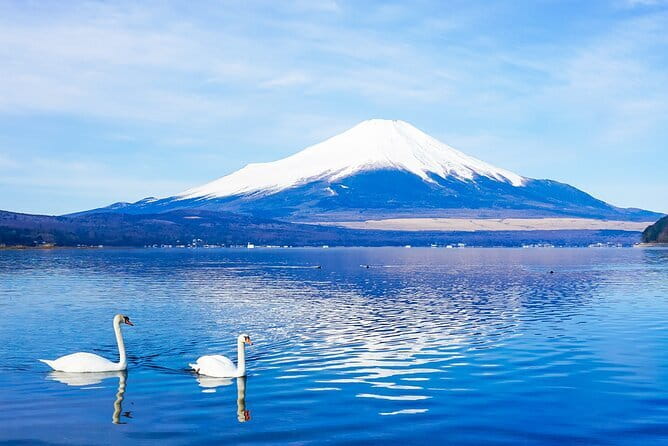
You wrap the day at Lake Yamanaka, sometimes called Swan Lake because of winter visitors. The vibe here leans quieter and more “slow Japan” than a strict sightseeing sprint.
You get about 1 hour 10 minutes, and this is where a crucial rule applies. Due to time constraints, you can only choose one experience:
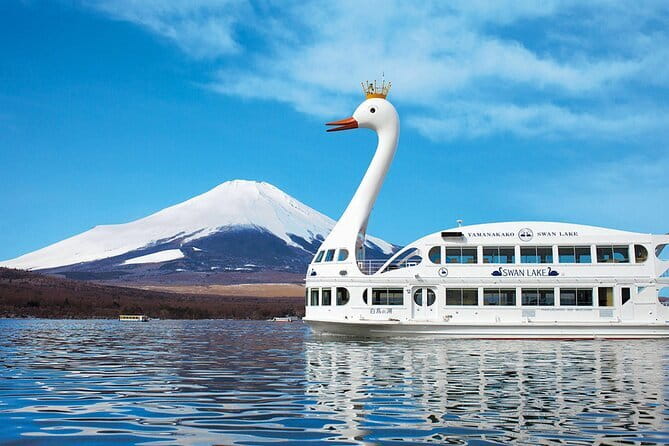
- a scenic swan-shaped boat cruise, or
- a relaxing hot spring (onsen) option
Both come with an additional fee of $8 per person, and neither is included in the base price. You cannot do both on this tour, so decide based on your priorities before you arrive.
Here’s how I’d choose. If you want the classic lake memory photo, pick the boat. If you want comfort after a long day on the road, pick the onsen. Either way, this stop gives you a sensory ending instead of ending the day with just viewpoints.
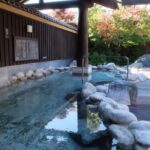
Also note the onsen rules. If you have tattoos, small ones may be covered with a sticker only if the tattoo is under a palm-sized area and there’s just one. Large tattoos mean hot spring entry is not permitted. If tattoos are part of your identity, plan for this early so your day does not get derailed at the last stop.
Driving time, comfort, and the traffic factor you can’t ignore
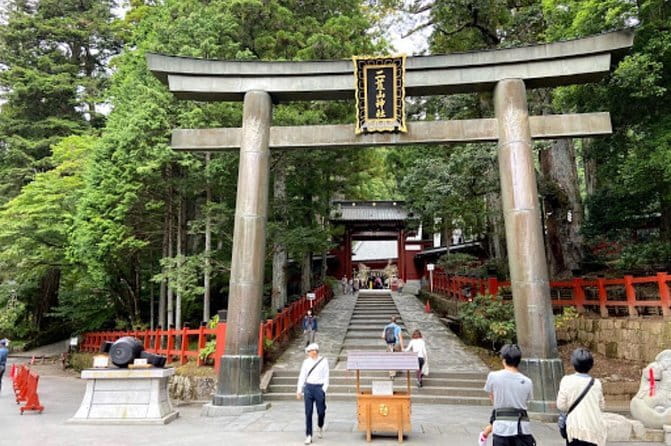
The drive is long. That can sound like a drawback, but it depends on your expectations. I like tours that treat the road as part of the experience, and this one does that by keeping you off buses you didn’t plan and out of taxi math.
That said, comfort varies. Some people have reported being in older vehicles with tight legroom. If you’re tall or you hate being cramped, take it seriously when you pack. Comfortable shoes, a bottle of water (you’ll also get one provided), and a bit of patience go a long way on a long day.
Traffic is the other big consideration. Weekend and holiday congestion can delay return time beyond 8 PM. The provider says they will cover overtime fees for the guide and driver, but the schedule itself may shift. If you’ve planned any tight onward transport right after the tour, leave slack.
What the guide adds (and what you should do for extra value)
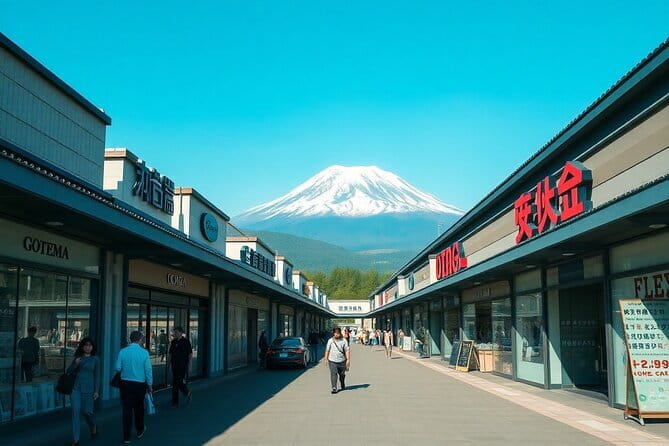
You’ll get a multilingual tour guide and a professional driver. In practice, this is most useful for timing and getting the group to the right places without wasting time. You also get help with the practical stuff like photo moments, where to stand, and how to make the most of short stops.
Some guides also bring energy and humor to the day. If your guide is Damon or BC or Mario or Laner, you might notice how much the day can lighten up with good organization and upbeat explanations. When the guide is on point, you get a smooth flow and clearer context for what you’re seeing.
But don’t assume every part of the day will be deeply detailed. Some comments point to limited English from a driver in certain cases, or minimal info at certain stops. So I’d set your expectation like this: you’re buying logistics and access, plus some guiding context. If you want extra depth, bring curiosity of your own—quickly look up a few basics about Fuji before you go.
Timing details that matter on the ground
Short stop windows make good planning more important than people expect. Each major stop comes with limited time, so decide early what you want most at that location.
At Lake Yamanaka, the choice between boat and onsen is the biggest schedule constraint. At other stops, you still get a set amount of time, and if traffic spikes, visiting times can be shortened, adjusted, or canceled. It’s not something you can control, so you can only control your mindset.
Also, the tour provides a mobile ticket, which helps you skip some hassle. Still, bring a backup plan: if you need cash for small purchases, have some ready because some places may not accept cards.
Practical tips: tattoos, cash, and Fuji visibility
Here’s what I’d do to make this day go smoothly:
- Bring some cash for places that might be cash-only, including small snacks and certain scenic spots.
- Plan for the tattoo policy if you want onsen. Small tattoos might be covered if conditions fit, but large tattoos mean no entry.
- Dress for temperature swings. Fuji-area weather can change fast, even within the same day.
- Keep your plan flexible for Mount Fuji visibility. If the mountain is in haze or clouds, you’ll still get plenty of scenic value from the lakes and viewpoints.
And one more small thing: since the schedule can run late on busy days, avoid arranging a close-by second activity for the same evening.
Who this tour fits best (and who might prefer something else)
This works especially well if you:
- want to see the major Fuji area highlights without renting a car,
- value a structured day with transport handled,
- like a mix of photo stops and short self-guided wandering,
- travel with kids, family groups, or anyone who gets tired fast from transfers.
It’s less ideal if you:
- want a high-information, lecture-style tour at every stop,
- hate cramped vehicle seating and long road time,
- need guaranteed clear views of Mount Fuji on your exact day.
Also, if you’re picky about comfort, ask yourself how much legroom matters to you. Some vehicles have been described as older, and if you’re tall, that can turn an otherwise smooth day into an endurance test.
Should you book this Fuji day tour?
I think it’s a good booking when you want an efficient, low-stress way to hit Fuji landmarks with round-trip transport and a guide who keeps things moving. The best part is that you’re not spending your mental energy on getting around; you’re spending it on the scenery, the lake walks, and choosing how you want to end at Lake Yamanaka.
Skip or think twice if your trip depends on a guaranteed, crystal-clear view of Mount Fuji or if you know you’re very sensitive to uncomfortable seating. Also, if onsen time is a must, double-check tattoo rules before you go.
FAQ
FAQ
What time length should I expect for this tour?
The tour duration is listed as about 10 hours.
Is transportation included from Tokyo and back?
Yes. Round-trip pickup and drop-off from a designated point is included, and you travel in an air-conditioned vehicle.
Do I visit Mt. Fuji 5th Station for every departure?
No. From Apr 26 to Sep 30 you visit Mt. Fuji 5th Station, but from Oct 1 to Apr 25 you go to Arakurayama Sengen Park instead.
Are boat rides and hot spring entry included?
No. At Lake Yamanaka, the boat ticket and onsen ticket cost $8.00 per person and are not included.
What about lunch?
Lunch is not included in the tour price.
How does the Lake Yamanaka part work?
Due to time constraints, you can choose either the swan-shaped boat cruise or the hot spring experience, not both.
Can I enter Japanese hot springs if I have tattoos?
Rules depend on size and the number of tattoos. If a tattoo is smaller than a palm and there’s only one, you may cover it with a tattoo sticker. Larger tattoos are not permitted for hot spring entry.
Is Mount Fuji always visible during the tour?
No. Weather is unpredictable, and visibility of Mount Fuji cannot be guaranteed.