REVIEW · BEPPU
A private tour of Beppu, the world’s best hot spring town.
Book on GetYourGuide →Operated by solfeggio · Bookable on GetYourGuide
Beppu is steam with a plan. This private 3-hour hot-spring tour is built around the famous Beppu Jigoku Meguri Hells route, so you see what makes this town tick without getting lost in the fog. You’ll start at Umi Jigoku (Sea Hell), walk through the onsen districts, then add local culture and food stops when it fits your group.
What I like most is the mix of sights and context: you don’t just look at steam, you learn why the different “hells” exist and how they connect to daily life. I also really like the comfort factor of a small group setup, including a Volkswagen up! when your route needs a drive. The one catch to consider is that the tour base includes only Umi Jigoku admission, so other hell sites and add-ons can raise the total cost on the day.
Key things to know before you go
- Umi Jigoku admission is included, and it’s the starting anchor for the whole experience
- You can mix walking and car time (Volkswagen up! for up to 3 guests) for an easier pace
- Other “hells” are optional and paid at each site if you want to go beyond Sea Hell
- Expect steam-bath culture up close, plus a sand-bath onsen stop
- Optional wellness like a private onsen bath or mushi-yu steam chamber can be added
In This Review
- Entering Beppu’s Hells: the “steam education” you’ll actually use
- Umi Jigoku Sea Hell: where the tour starts (and why it matters)
- Kannawa Onsen district walk: photos, shrines, and real onsen town rhythm
- The beach sand bath in Beppu: fun, quirky, and very onsen
- Tetsu-rin hot zones: mushi-yu and drop-off onsen areas
- Jigoku Mushi food: steamed cuisine with locally produced ingredients
- Private pacing, group size, and the Volkswagen up! factor
- Price and value: what $69 buys you in Beppu
- Season matters: why autumn and winter feel best
- Practical onsen etiquette and what to bring
- Who should book this Beppu private onsen tour
- Should you book it or skip it?
- FAQ
- FAQ
- How long is the Beppu hot springs private tour?
- What is included in the base tour price?
- Are other Beppu hell sites included?
- How does transportation work?
- Where do I meet the guide?
- What languages are available for the guide?
- Is it really private?
- What should I bring?
- Are there rules about food and drink?
- Can I add a private onsen bath or a steam chamber?
Entering Beppu’s Hells: the “steam education” you’ll actually use
Beppu can feel like one big hot-spring map with too many choices. This tour helps you make sense of it quickly. In three hours, you get a guided route that hits the must-see areas and explains the logic behind the famous steam sites, shrines, and photo spots.
The big value is that your guide helps you connect the dots. You’ll hear about the different hells (the tour can cover types like Sea, Blood, and Mud depending on what you choose), and you’ll learn how Beppu’s onsen culture shows up beyond the obvious attractions. If you’ve ever wondered why this town is so famous, this is the fastest way to get your bearings.
Umi Jigoku Sea Hell: where the tour starts (and why it matters)
Your tour begins at 海地獄, the Japanese name for Umi Jigoku or Sea Hell. This is included as a walking visit, plus the entry fee is covered. It’s a strong opener because the place looks and feels distinct: deep steam, a calmer garden-side vibe, and that signature ocean-like atmosphere people associate with Beppu’s hell route.
I like starting here because it sets expectations for the rest of the tour. Once you see Umi Jigoku, the other hot-spring “hell” concepts make more sense. You also get a practical head start on timing and behavior, which is useful if you plan to add other hell stops later (since those have their own entry fees).
Kannawa Onsen district walk: photos, shrines, and real onsen town rhythm
After you get oriented at Umi Jigoku, the tour moves into the historic onsen areas, including the Kannawa Onsen district. This is where Beppu stops being a checklist and becomes a place. You’ll walk past the kind of spots that make good photos, plus shrines and areas tied to local hot-spring traditions.
What makes this part work is the guide’s role. Guides can help you notice the details you’d otherwise miss, like how steam is used as part of the town’s identity, not just as a backdrop. And if you want to slow down for pictures or detour toward something you noticed, the tour is designed to be flexible for that.
One practical note: this is a walking component, so bring your towel and plan for warm, steamy conditions. Also note the tour isn’t suitable for wheelchair users, so it’s best if your mobility is solid.
The beach sand bath in Beppu: fun, quirky, and very onsen
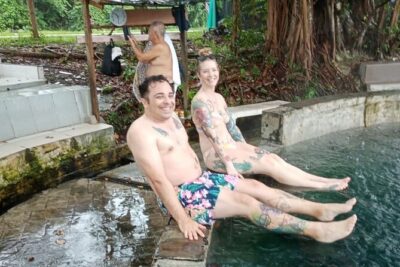
A highlight of this route is the Beppu sand-bath onsen experience. You’ll get a break and a photo stop, with about 30 minutes planned here. Sand baths are one of those activities that sounds strange until you’re standing in the middle of it, watching steam rise and feeling how different it is from regular hot-spring soaking.
This stop is a good fit for the tour’s pacing. Sand baths tend to take time to prepare for and to experience properly, so your guide’s timing matters. If your group wants to keep things relaxed, this is where the tour lets you do that without rushing.
Tip for comfort: plan your clothing and towel use around the sand-bath moment. The tour requests you bring a towel, and that’s not just a formality. Steam towns are humid, and your comfort depends on being prepared.
Tetsu-rin hot zones: mushi-yu and drop-off onsen areas
As the tour wraps up, you’ll be dropped off at two areas: 鉄輪むし湯 (tetsu-rin mushi-yu) and 鉄輪温泉 (tetsu-rin onsen). These names matter because they point to the onsen-and-steam infrastructure that makes Beppu feel like a functioning hot-spring town, not a theme park.
Depending on what you want, these drop-offs can be a chance to continue at your own pace. The tour also offers optional wellness experiences if you want to go further, like a private onsen bath or a steam chamber experience (mushi-yu). If you’re the kind of traveler who wants one special “wow” moment, this is where you can make it happen.
Jigoku Mushi food: steamed cuisine with locally produced ingredients
One of Beppu’s charms is that steam isn’t only for bathing. The tour is built to include Jigoku Mushi style steamed cuisine, made with locally produced ingredients. Even if you end up choosing a specific dish that suits your tastes, the key idea is that the food experience is tied directly to the hot-spring culture.
I like that your guide can shape food around your group. If you’re undecided, guides can recommend where to eat and what to try. In past experiences with this kind of tour, guides have also helped with dinner planning, including making reservations when needed.
Also, if you eat vegetarian or vegan, the tour info says vegetarian and vegan restaurant options are available. That’s a big deal in Japan, and it means you won’t have to force your group into a single option type.
Private pacing, group size, and the Volkswagen up! factor
This is a small-group experience, limited to 9 participants. For a truly private experience, you’ll want to book the Private Tour option in advance, because during busy seasons other guests may join if a private slot isn’t reserved.
Transportation is part of the value here. Up to 3 guests can enjoy both walking and driving between locations in a Volkswagen up! This matters because Beppu’s best steam stops are spread out enough that “all walking” might get tiring fast, especially if you’re dealing with humidity and heat.
For groups of 4 or more, a taxi will be arranged at an additional cost. That keeps the tour practical and helps prevent your schedule from turning into a long transit slog.
Price and value: what $69 buys you in Beppu
At $69 per person for about 3 hours, the core value is the guided route plus included entry to Umi Jigoku. The guide helps you save time and reduce guesswork, which is often what makes a guided onsen tour worth it in Japan.
One important budgeting point: the base tour includes Umi Jigoku admission only. If you want to visit other hell sites, you’ll pay their entry fees on the day. The same goes for extra food stops (restaurants and cafes) and any add-on wellness experiences like a private onsen bath or steam chamber.
So I’d think of this as a solid foundation that you can scale. If you want a shorter, cleaner experience, you can keep the add-ons minimal. If you’re a steam-bath person, you’ll likely enjoy paying a bit more to expand the route.
Season matters: why autumn and winter feel best
The tour info is clear: autumn and winter are best for Beppu’s hot springs. That tracks with what you’ll want from a hot-spring town. Cold air makes the contrast feel better, and you’ll probably appreciate the calmer rhythm that steam towns tend to have when the weather cools off.
In warmer months, you’ll still enjoy Beppu, but humidity can make everything feel heavier. If your priority is comfort and that classic hot-and-cold sensation, timing your visit in autumn or winter is a smart move.
Practical onsen etiquette and what to bring
This tour has a simple ruleset. You should bring a towel, and smoking, alcohol, and drugs aren’t allowed.
Also, travel insurance isn’t included. That’s not a scary warning, just good planning. If you’re doing sand baths or spending time walking in steamy areas, accidents can happen anywhere.
One more practical thought: since the course can be flexibly changed to match your interests, you can steer it toward relaxing, photos, or food. That’s helpful if your group has mixed energy levels.
Who should book this Beppu private onsen tour
This tour fits best if you want:
- A guided route through Beppu’s most famous hot-spring sites
- A mix of walking and car time rather than a full-day sprint
- A chance to try steam-bath culture and sand-bath onsen in a single outing
- Optional help with adding a private wellness moment and shaping food plans
It may not be the right fit if you use a wheelchair or if someone in your group is over 95, since the tour isn’t suitable for those needs.
Should you book it or skip it?
Book it if you want the fastest path to understanding Beppu. Starting at Umi Jigoku and then building out with onsen districts, a sand bath, and optional add-ons is a smart way to get value without wasting energy.
Skip it only if you’re trying to do everything entirely on your own. If you’re the type who enjoys researching each hell site, then wandering freely might work. But if you’d rather spend your time experiencing steam and local culture, a private, guided route is the easier win.
FAQ
FAQ
How long is the Beppu hot springs private tour?
It runs for about 3 hours.
What is included in the base tour price?
The base tour includes a walking visit to Umi Jigoku (Sea Hell), including its entry fee.
Are other Beppu hell sites included?
Other hell tour locations are optional. Their entry fees are paid on the day.
How does transportation work?
For up to 3 guests, the tour includes walking and driving between locations in a Volkswagen up!. For groups of 4 or more, a taxi will be arranged at an additional cost.
Where do I meet the guide?
Meet outside Umi Jigoku, near a cafe called cafeteria umi.
What languages are available for the guide?
The tour guide speaks English and Japanese.
Is it really private?
To guarantee a fully private experience, book the Private Tour option in advance. If you don’t, other guests may join during busy seasons.
What should I bring?
Bring a towel.
Are there rules about food and drink?
No smoking is allowed, and alcohol and drugs are not allowed. Food at restaurants or cafes is not included, so you’d arrange meals separately if you want.
Can I add a private onsen bath or a steam chamber?
Yes. Optional wellness experiences like a private onsen bath or a steam chamber (mushi-yu) can be arranged after booking.