REVIEW · SENARU
3d/2n trekking mount rinjani summit lake & hot springs
Book on GetYourGuide →Operated by Mount rinjani summit · Bookable on GetYourGuide
Rinjani rewards you for waking at 3am. This 3D/2N route is built around Lake Segara Anak in the crater and a summit sunrise you can’t really fake with any shortcut.
I love the way the trek starts with wide open Sembalun grass savanna, then slowly turns into steep crater climbing and dense forest. I also like that you camp at two different high rim spots, so you see the lake and the volcano from more than one angle. The main drawback is simple: the 3D/2N plan is tough, and the extra walking between the summit area and the lake/second campsite is where many people end up cutting the program.
In This Review
- What makes this trek worth it
- Key things to know before you go
- Sembalun vs Senaru: your big decision before the hike
- Day 1: transfer, registration, and camping on the crater rim (2,639 m)
- Day 2: summit sunrise at 3,726 m and the hot-springs lunch at Segara Anak
- Day 2’s second rim advantage: changing the view without adding days
- Day 3: a forest-rich descent back to Senaru (arrive around 1 pm)
- Trek toughness: what the 3D/2N plan really asks of you
- Price and logistics: what you pay for at $141, and what’s extra
- What to pack so you don’t suffer unnecessarily
- Who should book this trek, and who should not
- Should you book the 3D/2N Rinjani Summit trek?
- FAQ
- Where does the trek start, Senaru or Sembalun?
- How long is the trek?
- What time do you start on Day 1?
- What time do you start the summit climb?
- What’s included with the hot springs?
- Are meals included?
- How much water do I get?
- Is the national park entrance fee included?
- What trekking gear is provided?
- What should I bring?
What makes this trek worth it
If you’re the kind of traveler who enjoys early starts, steady climbing, and big payoff views, you’ll get your money’s worth. If you want an easier hike, or you hate long days after the summit, you’ll probably wish you booked the shorter 2D option instead.
Key things to know before you go
- Sembalun or Senaru start depending on tickets: the route can switch gates if Sembalun is full
- Two rim camps for big-picture views: sunrise/sunset angles change fast at altitude
- Summit push timed for sunrise: you wake at 3am and target the top around dawn
- Lake Segara Anak + hot springs stop: lunch is paired with a brief soak in the crater heat
- Dense forest changes the feel by Day 3: the trail turns lusher as you descend
- Budget the national park fee: IDR 200,000 per day per person is not included
Sembalun vs Senaru: your big decision before the hike
This trek usually begins in Sembalun, but your final starting gate can depend on ticket availability. The plan is designed to start from Sembalun gate and end at Senaru gate. If Sembalun is full, you’ll start from Senaru gate instead and the 4WD transfer + registration timing adjust accordingly.
That gate choice matters more than people expect. Starting from Sembalun typically means you begin in open grasslands, with bigger, airier views as the trail rises. If you start from Senaru, you may feel the mountain earlier—less “big sky” grass walking and more immediate climbing. Either way, the trek core stays the same: crater rim sunset, summit sunrise, then crater lake and hot springs before you head back down.
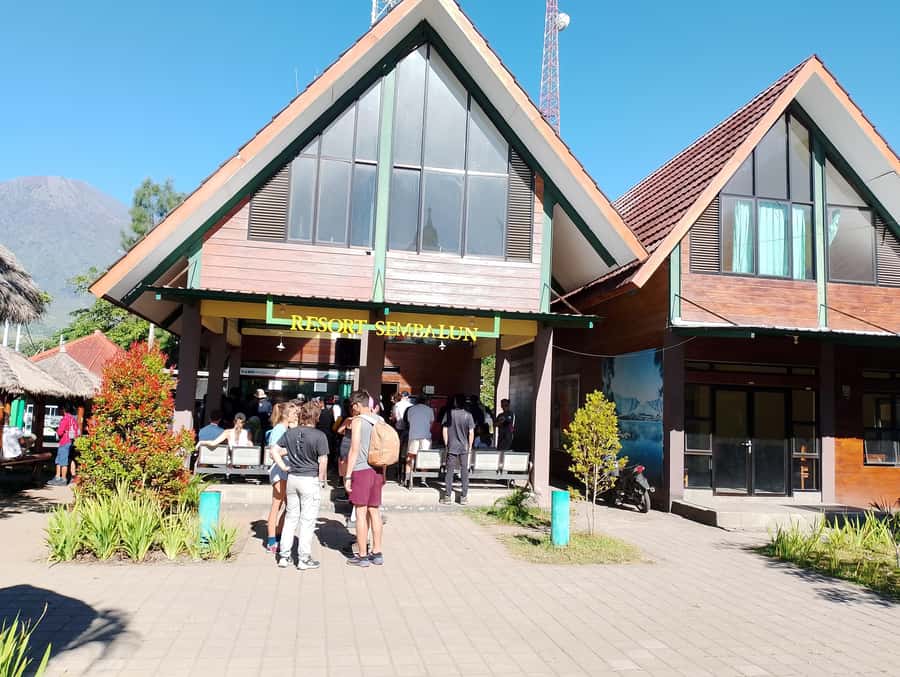
Pickup timing also follows the start area. If you’re staying in Sembalun, you’re picked up at 08:30. If you’re staying in Senaru, the pickup is 07:00. Either way, you’re transported by 4WD, and you register at the Rinjani Trek Centre in Sembalun (1,156 m) before you begin trekking.
Day 1: transfer, registration, and camping on the crater rim (2,639 m)
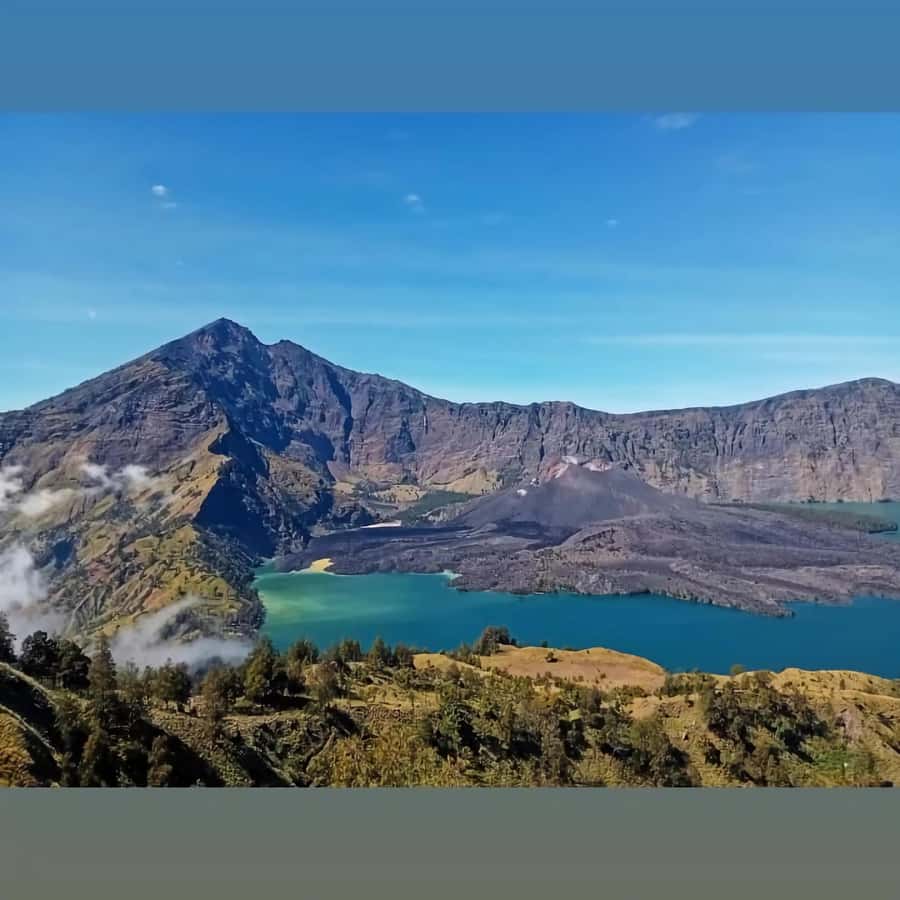
Day 1 is all about getting set up and getting high without rushing. After pickup, you ride to Sembalun by 4WD and register at the trek centre. Then you start with that classic Sembalun style: undulating grasslands that roll upward rather than immediately attacking you.
Along the way, you’ll make rest stops at Pos 1 and Pos 2 for snacks and breaks. After that, you reach Pos 3 (1,800 m) for a longer lunch stop. This is one of the most important timing points in the whole program. Lunch at Pos 3 gives you a steadier energy base before the trail turns steeper.
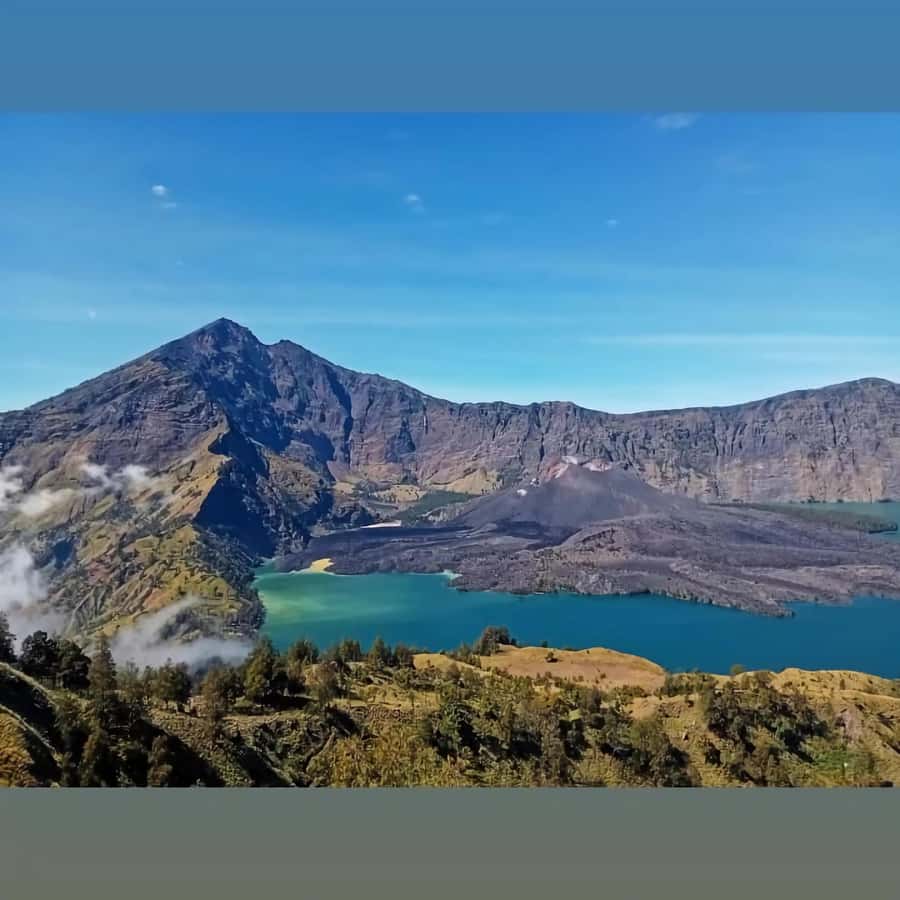
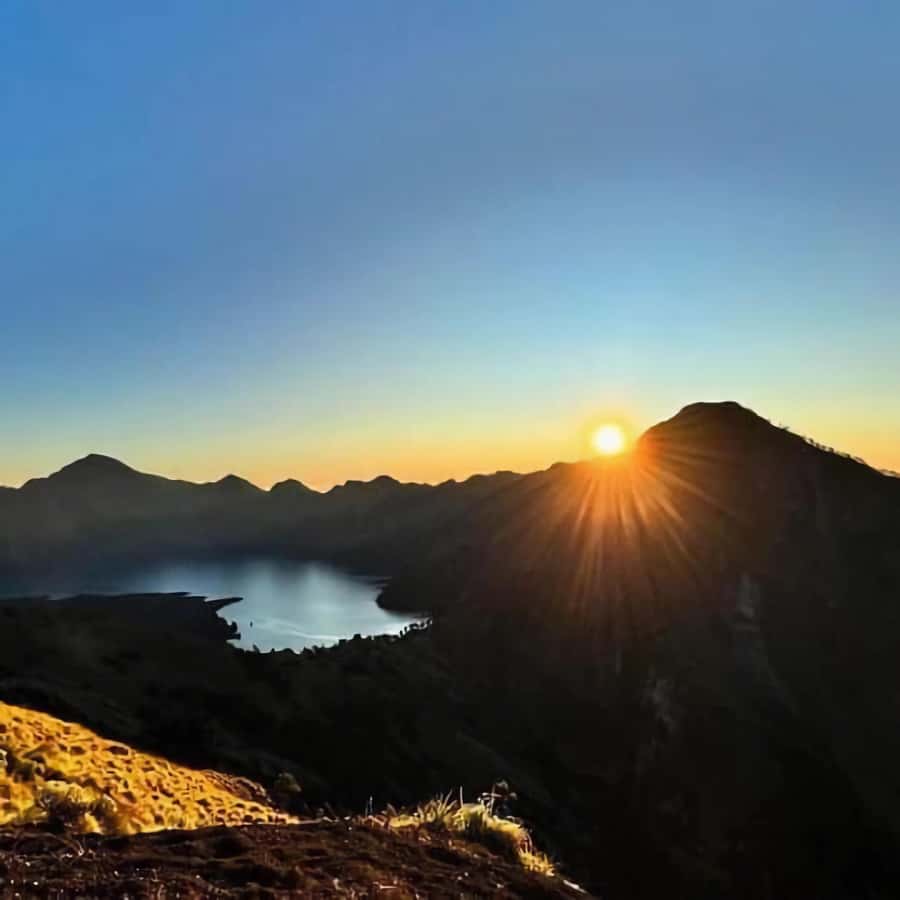
Then comes the steep climb to the Sembalun Crater Rim (2,639 m). This is where the day earns its name: sunset views over Lake Segara Anak, plus wide angles toward the summit area and northern Lombok. You’re camping right on the rim, which means you’re not burning daylight to “reach the view.” The view is built into the campsite plan.
What to watch for on Day 1: the shift from grassy walking to steeper crater-rim climbing. It’s not just tougher legs—it’s also a different footing feel, and you’ll want to keep your pace controlled even if the scenery is tempting you to move faster.
Day 2: summit sunrise at 3,726 m and the hot-springs lunch at Segara Anak
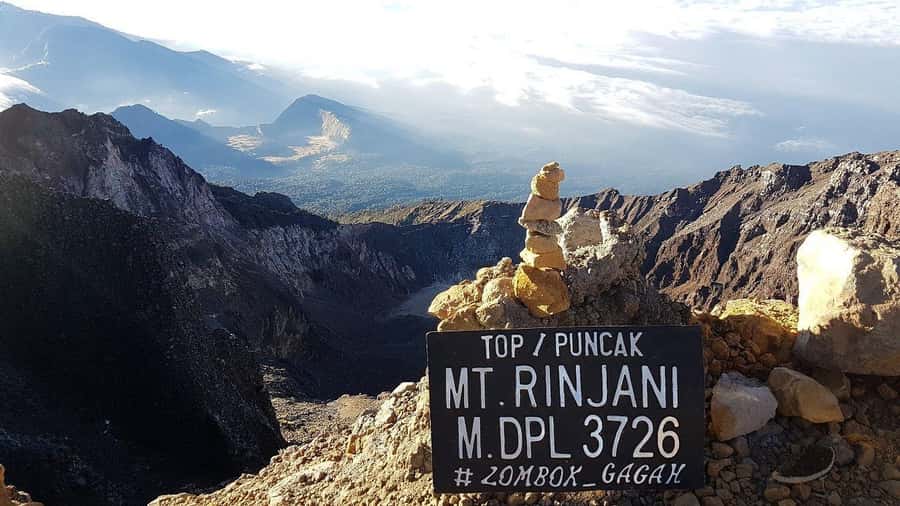
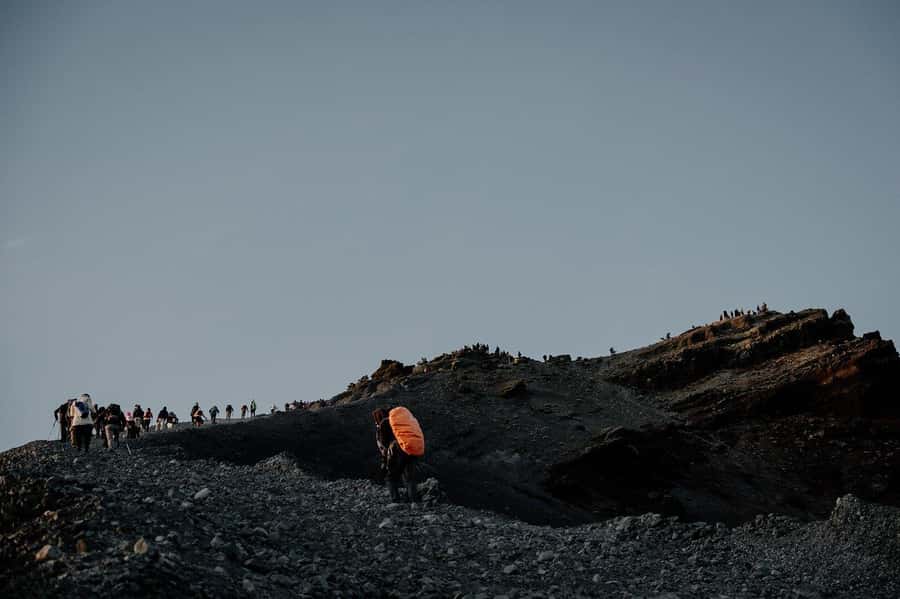
Day 2 starts early on purpose. You wake at 3:00am with a light breakfast, then begin the challenging three-hour trek to the summit (3,726 m). The whole goal is to arrive in time for sunrise, and that timing is what makes this trek so popular.
When you come back down to the crater rim campsite, you get a hot breakfast and rest before you start descending into the crater. Then the day turns into crater-floor time: you head toward Lake Segara Anak (around 2,000 m) for lunch, and this is where the trek becomes more than just climbing.
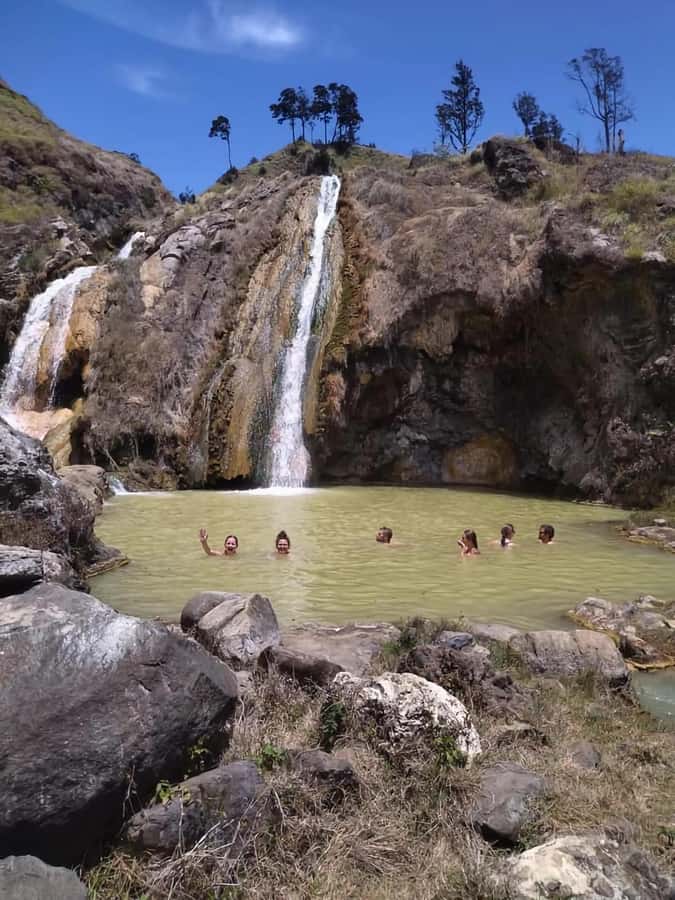
Lunch is paired with hot springs. After lunch on the shore, you can swim or soak for a few minutes. This matters because it breaks the rhythm: you go from cold/dark summit effort into warmer crater heat, then you continue around the lakeshore.
After the lake area, you’ll continue trekking around the crater side before your next climb out. The trail here is steep and rocky, and it passes through dense forest. You’ll also notice how the scenery shifts again: you leave the more open crater-lake area and work back through thicker greenery as you move to the second camp.
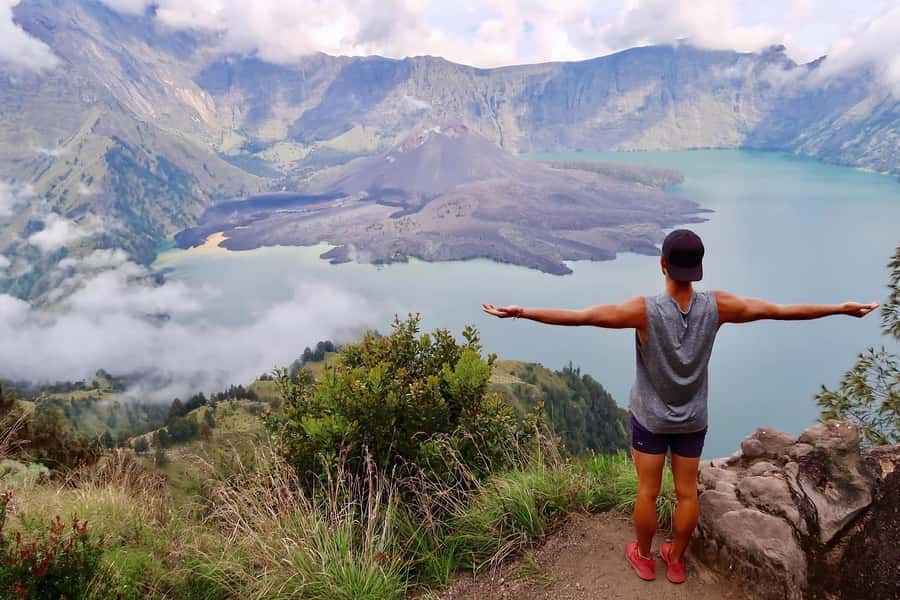
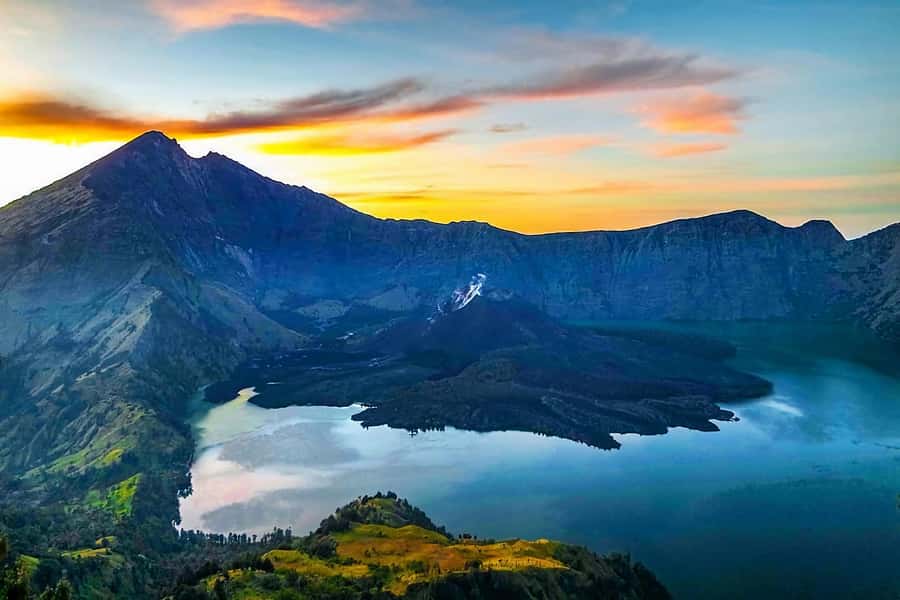
Your Day 2 ends at the Senaru Crater Rim (2,641 m). Dinner and camping happen there, and the view is a strong payoff: you look across the lake back toward the summit area, and you also get sightlines to Gunung Baru (the small volcanic cone inside Rinjani’s crater). From this rim, you can also see Mount Agung in Bali and the Gili Islands, if weather allows.
Day 2’s second rim advantage: changing the view without adding days
A lot of volcano treks feel like a single viewpoint repeated. This plan avoids that. Because you camp once on the Sembalun crater rim and once on the Senaru crater rim, the lake and summit sit in a different part of your visual frame.
That second rim matters practically, too. You’re not just walking to get down. You’re walking so you can take in the crater from a new angle after a whole cycle of summit work and crater descent. It’s one reason this 3D/2N option is considered the flagship version compared with shorter itineraries.
The tradeoff is that it’s physically heavy. The longer you stay in the crater, the longer the overall day feels. If you’re unsure about your stamina, this is the part you should think about before booking.
Day 3: a forest-rich descent back to Senaru (arrive around 1 pm)
Day 3 is about controlled descent and getting back to lower elevation safely. After breakfast, you descend using rest spots Pos 3, Pos 2, and Pos 1, then make a longer lunch break on the way down.
As you drop lower, the forest becomes thicker and increasingly lush. That lushness is more than a nice word—it’s a real change in trail character. You’ll feel it as more shade, more packed ground, and more footing changes than you got on the earlier rim sections.
You arrive in Senaru (601 m) at about 1:00 pm. After that, the tour includes drop-off to Senggigi, Bangsal port, and Mataram, so you’re not stuck figuring out transport right after a multi-day hike.
Trek toughness: what the 3D/2N plan really asks of you
This is the point I’d be most direct about. The 3D/2N program includes the summit push plus extra crater trekking between major stops. The hiking is not just about reaching the top once. It keeps going: after summit time, you descend toward the lake, get the hot-springs break, then you climb out again to reach the other rim campsite and close the day with dinner and views.
One key consideration: the 3D route can feel exhausting even for fit people, especially due to the long stretch between the summit area and the lake/second campsite. Some hikers end up skipping parts and going down with the group rather than completing the full plan. In practical terms, the shorter 2D option is a common choice because it reduces how long you spend in that middle crater section.
So here’s my practical advice: be honest about your endurance for long days, not just summit ambition. If you’re recovering slowly, carrying extra gear, or you’re easily drained after a big climb, the 2D plan may fit you better.
Price and logistics: what you pay for at $141, and what’s extra
At $141 per person, you’re paying for the whole support system: a guide, professional porters, camping gear setup, meals, and key safety/comfort items.
Included items are substantial:
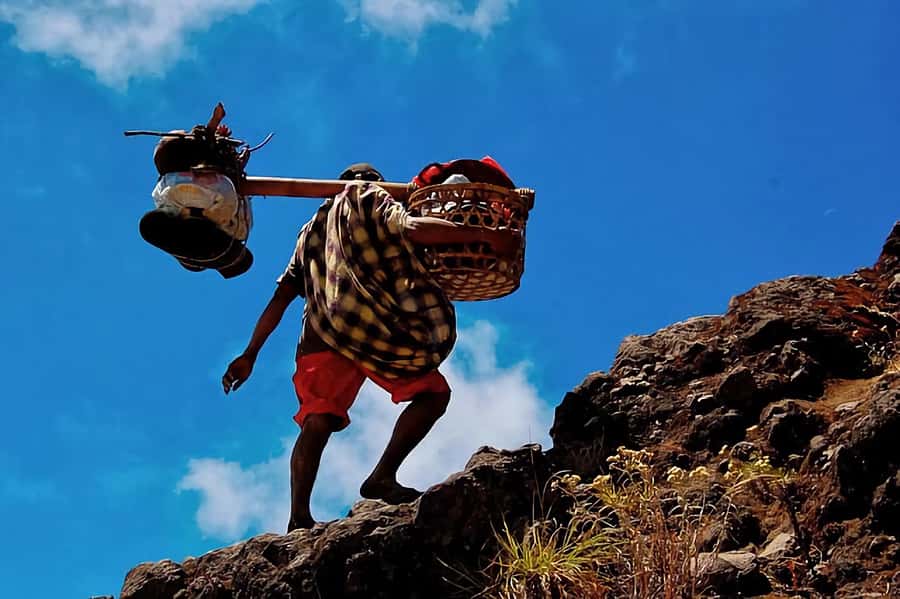
- A trekking guide and porters who carry cooking gear and camping equipment
- English-speaking guide
- Food and drinking, plus 3 litre mineral water per person per day
- Tent, toilet tent and paper, sleeping bags, and mattress
- Trekking poles, plus a head lamp/hand torch
- Lunch, dinner, and breakfast
- Drop-off after the trek to Senggigi, Bangsal port, and Mataram
What’s not included:
- National park entrance fee: IDR 200,000 per day per person
- Raincoat
- Trekking shoes
That park fee is the main extra budget item you should plan for. Since the trek spans multiple days, you’ll likely pay for more than one day of access, so add this before you commit emotionally to the low headline price.
The value equation is good if you want to avoid the hassle of arranging porter gear, camping supplies, and structured meal stops on your own. It’s not the value play if you already have gear and a team and you’re confident doing this route independently, because independence still requires permits, local coordination, and safety planning.
What to pack so you don’t suffer unnecessarily
You don’t need luxury gear, but you do need the right basics. The list you should plan around includes:
- Passport
- Sunglasses, hat, and sunscreen
- Jacket, gloves, long pants, hiking pants
- Hiking shoes (note: trekking shoes are not included)
- Sandals for off-trail time
- Camera and power bank
- Cash
- Sunglasses plus a camera helps because the views at rims and the lake can tempt you to take a lot of photos
Two practical packing notes:
- Bring layers for early hours and colder moments around sunrise timing. The tour expects you to start well before dawn, and you’re also outdoors through different weather conditions.
- Rain planning matters because the raincoat isn’t included. If you’re using a thin umbrella system, it won’t help you much on a steep, muddy trail. A real rain layer is usually the better choice.
Also confirm you understand footwear expectations. If you show up with sneakers that aren’t really hike-ready, you’ll feel it on rocky, steep segments—especially around the summit approach and crater rim transitions.
Who should book this trek, and who should not
This 3D/2N Rinjani summit route fits best if you want:
- A complete experience: summit sunrise, sunset rim moments, lake time, and hot springs
- A structured trek with porters carrying camping setup
- A route that changes scenery across grasslands, crater terrain, and dense forest
It might not fit if:
- You want a shorter, easier schedule and don’t want the extra long walking after summit time
- You’re worried about the steep and rocky crater parts, or you don’t handle fatigue well after early morning effort
- You’re traveling with someone who can’t commit to full walking days without breaks beyond normal rest stops
Should you book the 3D/2N Rinjani Summit trek?
Yes, if you’re excited by the combo of summit sunrise, crater rim camping, and Lake Segara Anak hot springs, and you’re willing to work for it over three full days. The included support—gear, meals, guides, and key equipment—adds real value, and the two-rim design gives you more than one memorable viewpoint.
Maybe not, if you’re hoping for a light hike. This is a serious 3-day route, and the longer crater stretch after the summit is the part that can overwhelm stamina. If that sounds like you, the shorter 2D plan is a smarter fit.
FAQ
Where does the trek start, Senaru or Sembalun?
You’ll start from Senaru gate or Sembalun gate, and the plan ends at Senaru gate. The exact starting gate depends on ticket availability for Sembalun. If Sembalun is full, you start from Senaru instead.
How long is the trek?
It’s a 3-day trek with 2 nights camping.
What time do you start on Day 1?
Pickup depends on where you stay: 07:00 in Senaru or 08:30 in Sembalun. You then travel by 4WD and register before beginning the hike.
What time do you start the summit climb?
On Day 2, you wake at 3:00am and begin the challenging trek to the summit.
What’s included with the hot springs?
After lunch by Lake Segara Anak, you can enjoy the hot springs for a few minutes.
Are meals included?
Yes. The trek includes lunch, dinner, and breakfast, plus food and drinking during the trek.
How much water do I get?
The plan includes 3 litre mineral water per person per day on the trek.
Is the national park entrance fee included?
No. The entrance fee is IDR 200,000 per day per person.
What trekking gear is provided?
You get a tent, toilet tent and paper, sleeping bags, mattress, trekking poles, and a head lamp/hand torch.
What should I bring?
Bring items listed such as passport, sunglasses, hat, sunscreen, a jacket, gloves, long pants, hiking shoes, sandals, a camera, cash, hiking pants, and a power bank. Raincoat and trekking shoes are not included.