REVIEW · TAUPO
Self-Guided Geothermal Tour in Orakei Korako
Book on Viator →Operated by Orakei Korako Cave Thermal Park · Bookable on Viator
Hot steam, boiling mud, and a cave loop. That’s Orakei Korako, a geothermal park near Taupo where the ground is constantly doing something interesting, from hissing vents to active geysers.
I especially like the self-guided setup. You can slow down for close-up steam, keep moving when you feel like it, and choose how long you linger at each turn on the boardwalk. I also love that this park is active in the real sense: up to 23 natural geysers can play across the area, so even your timing can shape what you see.
One thing to consider: expect stairs and steep sections. The trail is well-built, but it can be tiring on the way down, and it’s not set up for pushchairs or buggies.
In This Review
- Key points to know before you go
- Orakei Korako’s boardwalk loop: why it feels less crowded and more real
- What you’ll see on the 2.5 km route (and how to time your stops)
- Ruatapu Cave: the rare geothermal cave stop you’re actually here for
- Ferry across the lake: included, on demand, and genuinely useful
- Practicalities that can make or break your comfort
- Stairs, steep steps, and your knees
- Bring water, because you’ll want it
- Toilets and clothing expectations
- Weather is part of the experience
- Stroller/pushchair reality
- Price and value: why $35.37 can feel like a bargain
- Who should book Orakei Korako (and who might skip it)
- Should you book this self-guided geothermal tour?
- FAQ
- FAQ
- What’s the duration of the Orakei Korako self-guided geothermal tour?
- Is this tour guided or self-guided?
- What does my ticket include?
- How long is the walking route?
- Do I need food or drinks included?
- Are the ferry rides scheduled?
- What are the hours for the park activity?
- Is the Ruatapu Cave part of the visit?
- Is it suitable for children?
- What’s the cancellation policy?
Key points to know before you go
- Ruatapu Cave is part of the loop, with a thermal mirror pool in a rare geothermal cave setting
- 1.5-mile (2.5 km) boardwalk gives you a safe, clear route around the thermals
- Return ferry rides are included on demand, so you get lake views and flexible timing
- Up to 23 geysers can be active, which keeps the park feeling alive and changeable
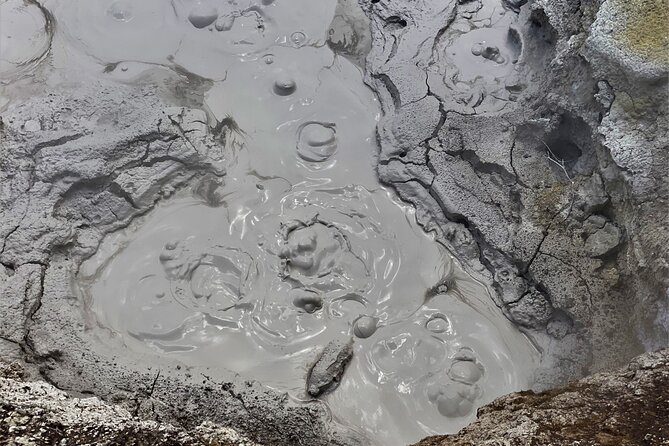
- Moderate fitness helps: plan for stairs and some steep steps near mud pools
- No food/drinks are included, so bring water and plan around what’s available on site
Orakei Korako’s boardwalk loop: why it feels less crowded and more real
Orakei Korako is built for people who like nature without the tour-bus vibe. The park caps capacity at a maximum of 100 travelers, and the experience is self-paced instead of scheduled to a guide’s talking points. That matters because geothermal sites get crowded fast, and the best moments often happen when you’re standing still and letting your eyes adjust to the colors and motion.
You start at Orakei Korako Geothermal Park & Cave, then you’ll head out along the loop that winds through boiling pools, steam vents, and mineral deposits. The whole idea is that you’re walking inside the action, not just watching from a distance. With that kind of up-close access, you start to notice small changes: the rhythm of steam, the way colors shift across silica terraces, and how the ground seems to “breathe” as temperatures and pressure vary.
If you’re coming from the more famous geothermal stops around New Zealand, this one often feels like the calmer cousin. It’s still dramatic, but it doesn’t feel like a theme park.
What you’ll see on the 2.5 km route (and how to time your stops)
The experience runs about 2 hours (approx.), built around a 1.5-mile (2.5 km) boardwalk loop. That length is short enough to do even if you’re not a big hiker, but it’s long enough that you’ll actually work up a little sweat. A key theme here is “close-up action.” The trail is designed so you’re near the steaming features without needing to scramble.
Here’s how the loop tends to feel as you go:
1) You’ll get moving early with big views of the geothermal area. Think steam vents, hot springs, and that mineral color you can’t fake with paint.
2) As you continue, you’ll hit sections with mud pools and bubbling geothermal water. These are the moments where you’ll feel how intense the ground heat is. The steam can look almost alive.
3) You’ll also see silica terraces—those layered mineral formations that build as water and gases move through the area over time. They’re one of the reasons Orakei Korako looks different from other geothermal parks.
4) Near the middle/end of the loop, you’ll work your way toward the Ruatapu Cave area. Even if you’ve seen geothermal caves elsewhere in your travels, this one is a special stop.
A practical tip: don’t rush. The trail is clearly signed and you can follow it without guesswork, but geothermal sights reward patience. If you pause at each main platform long enough for your eyes to adjust, the textures jump out more.
Also note the park can be active in unpredictable ways. There can be geyser activity that comes and goes, so if you happen to time it well, you may see extra bursts of steam or water.
Ruatapu Cave: the rare geothermal cave stop you’re actually here for
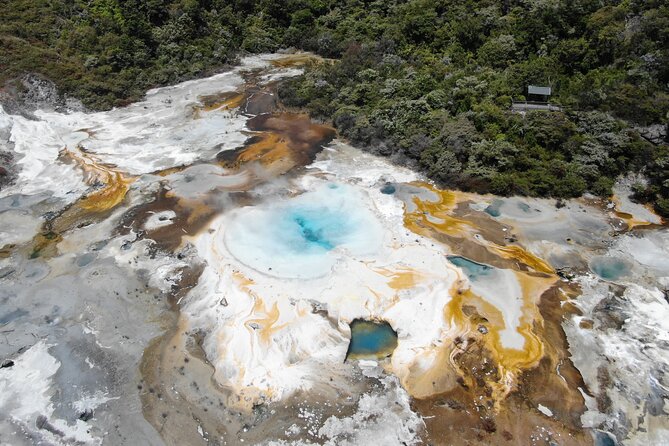
The headline moment is Ruatapu Cave. This geothermal cave is rare—listed as one of only two geothermal caves in the world—and it’s known for its thermal mirror pool.
What does that mean for you on the ground? It means you’re not just viewing surface activity. You’re stepping into a cave environment influenced by the geothermal system, where the combination of heat, water, and light creates a strange, almost unreal look. The thermal mirror pool is the visual centerpiece. If you like photography, this is where you’ll slow down the most, because the lighting can make the surface look different from minute to minute.
One more reason this cave stop is valuable: it adds variety. A geothermal walk can otherwise start to feel repetitive—steam, then steam again. The cave gives you a clear “chapter break” in the experience, so the entire loop feels like more than just a long series of hot vents.
Ferry across the lake: included, on demand, and genuinely useful
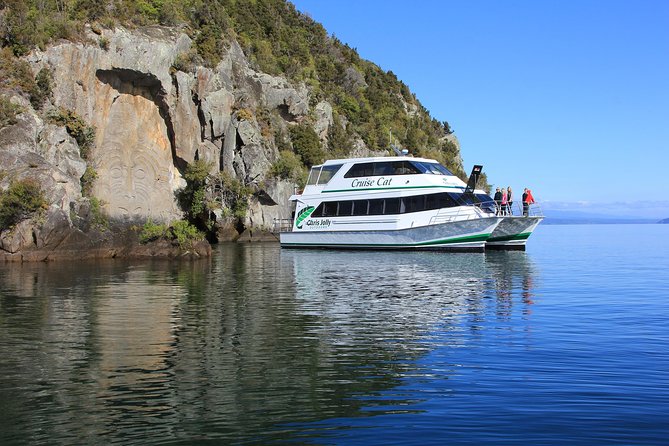
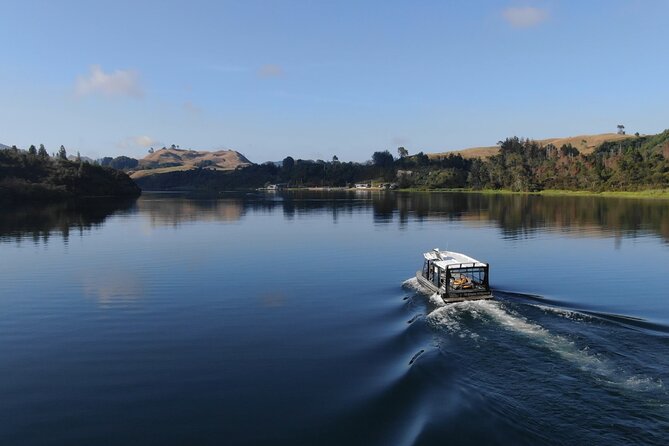
One of the smartest parts of this experience is the round-trip ferry. It’s included, and it runs on demand—meaning you’re not locked into a single pre-timed tour boat schedule. You can move at your own pace on the boardwalk, then time your return when you’re ready.
The ferry matters more than it sounds. First, it breaks up your day so you’re not immediately knee-to-boardwalk the moment you arrive. Second, it gives you an easy, scenic perspective of where you are—Lake Taupo’s shoreline views with geothermal steam rising beyond.
It also helps explain why this park often feels like you’ve slipped away from the main tourist flow. The water crossing creates that “off to a separate world” feeling, and when you step back onto land, the boardwalk loop feels like a self-contained adventure.
Practicalities that can make or break your comfort

Orakei Korako is very doable, but you’ll enjoy it more if you prepare for a few specifics.
Stairs, steep steps, and your knees
The boardwalk is safe and well made, but the route includes steps and some steeper sections near geothermal features. That can be a bigger deal on the way down than you’d expect. If you have knee issues, wear supportive shoes and take it slow on descents.
Bring water, because you’ll want it
There are no food/drink inclusions with your ticket, and you’re on your feet for long enough to get thirsty. I’d plan to carry water. Even in cooler weather, you can warm up from the heat of the steam and the effort of walking.
Toilets and clothing expectations
From the practical feedback I gathered, there can be limited restroom access during the exploration portion, so don’t treat this like a place where facilities are “around every corner.” Also, the site itself can feel warmer than the visitor center. Dress in layers you can manage—especially if you visit in rain or winter wind.
Weather is part of the experience
The tour operates in all weather conditions, so you’ll want clothing that works when it’s damp. Rain gear helps, but you also want shoes that handle wet boardwalks. Steam in fog can be atmospheric, but slippery surfaces are still slippery.
Stroller/pushchair reality
This isn’t described as stroller-friendly. If you’re using a stroller or pushchair, plan for a tougher time on stairs and steps. For small kids, you may have an easier experience carrying them instead of relying on a buggy.
Price and value: why $35.37 can feel like a bargain
At $35.37 per person, this is priced like an easy add-on from Taupo, but the content is closer to a full “main event” nature stop. Here’s why that price makes sense:
- Entry includes the self-guided tour without paying for a guide’s hourly time.
- You get return ferry rides included, which removes one of the hidden costs many tours tack on later.
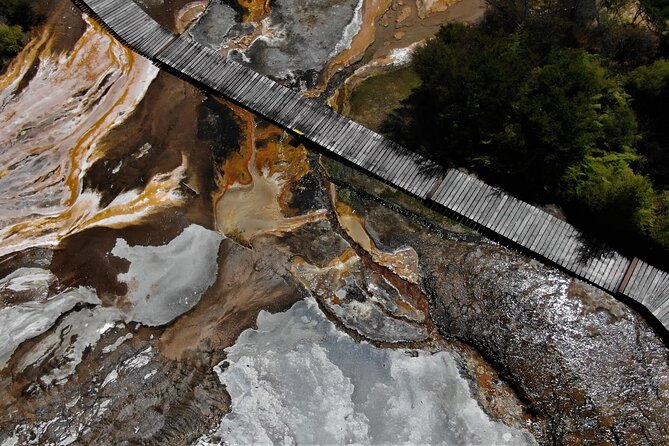
- The walking route is a real loop—2.5 km—so you’re not just doing a quick stroll to a single viewpoint.
- The park delivers variety: mud pools, hot springs, geysers, silica terraces, and the Ruatapu Cave stop.
It’s also an efficient use of time. You’re looking at around 2 hours, not half a day tied up in transport schedules. That makes it a smart choice if you’re trying to pack Taupo’s best nature stops into a tight itinerary.
If you’re traveling solo, this kind of ticket often feels even better because you’re not paying extra for a private group experience or forced waiting around for other people.
Who should book Orakei Korako (and who might skip it)
This tour fits best if you want:
- a self-paced nature walk with clear signage
- a geothermal park that feels less crowded than the biggest headline attractions
- a strong mix of surface thermals plus a cave highlight
- a manageable walking distance that still feels like you did something
It’s also a good match if you’re traveling on a route that includes Rotorua and Lake Taupo. Orakei Korako works well as a stop on the way through, especially because it’s structured around an efficient loop.
You might rethink it if:
- you struggle with stairs and steep steps
- you need a fully stroller-accessible path
- you’re expecting a guided lecture or long explanations (this is intentionally self-guided)
Should you book this self-guided geothermal tour?
I think you should book Orakei Korako if you want a nature-first geothermal experience with real geothermal activity and a standout cave stop. The Ruatapu Cave element is the differentiator, and the included ferry makes it feel like more than a simple boardwalk visit.
If your idea of fun is watching steam rise, seeing bubbling mud pools close up, and walking at your own pace without group timing stress, this is a strong yes. Just show up ready for stairs, bring water, and dress for weather—then let the ground do its thing.
FAQ
FAQ
What’s the duration of the Orakei Korako self-guided geothermal tour?
The experience is about 2 hours (approx.), based on the self-guided loop and time at the geothermal features.
Is this tour guided or self-guided?
It’s fully self-guided. There’s no guide included.
What does my ticket include?
Your ticket includes admission for the self-guided experience and return ferry rides on demand, along with GST.
How long is the walking route?
You’ll follow a boardwalk loop of about 1.5 miles (2.5 km).
Do I need food or drinks included?
Food and drinks are not included in the ticket price. The tour does operate in all weather, so plan for what you’ll need to stay comfortable.
Are the ferry rides scheduled?
The return ferry rides are included on demand, so your timing is flexible based on how long you spend walking and exploring.
What are the hours for the park activity?
The listed opening hours are 8:00 AM to 3:30 PM, Monday through Sunday, for the period shown.
Is the Ruatapu Cave part of the visit?
Yes. The Ruatapu Cave is a key part of the experience, including access to the thermal mirror pool.
Is it suitable for children?
Children must be accompanied by an adult. The walk includes stairs and steps, so you’ll want to judge it based on your child’s comfort and mobility.
What’s the cancellation policy?
You can cancel up to 24 hours in advance for a full refund, with the cutoff based on local time. If you cancel less than 24 hours before the start time, the amount paid is not refunded.